Everything you need to know about professional uniforms: types and who should wear them
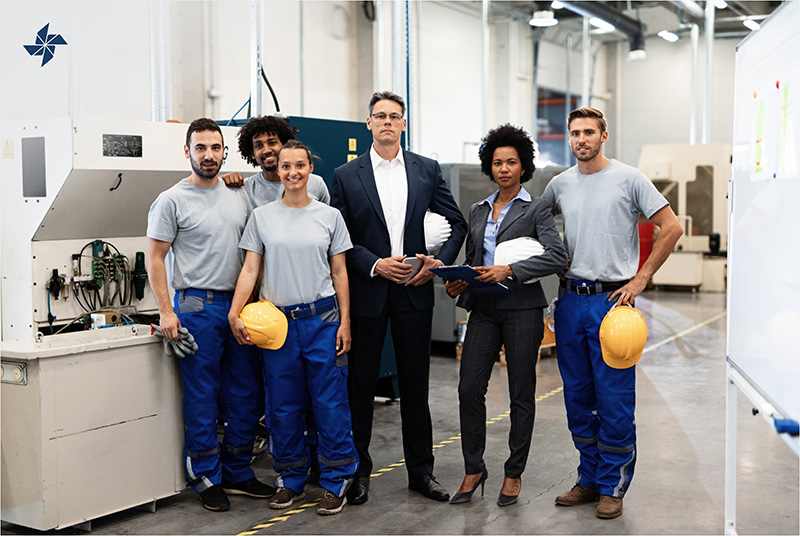
It’s very common to walk into a store or company and instantly recognize who works there. After all, uniforms help standardize the team and allow quick identification of employees. But far beyond that, uniforms contribute to job performance and everyone’s safety. In today’s article, we’ll explain everything you need to know about different uniform types and who should wear them. Let’s go!
Types of uniforms
First, it’s important to know there are different types of professional uniforms. There isn’t one “best” model—you should choose what best fits the duties of each role in your company. The main types you should know are:
- Formal uniform: pieces made with lighter fabrics and traditional models. Many professional areas adopt this style to standardize image and convey organization, trust, and sophistication. In general, this includes dress pants and shirt, suit, blazer, and dress. Here at Ideal Work, fabrics are chosen based on drape, elasticity, and—above all—presentation impact. We focus on a current, modern, practical, and functional formal line.
- Casual uniform: creates a standardized message to the public, but with a more relaxed visual identity and aesthetic. It’s used by professionals who need to be easily identified, conveying trust and organization. For that reason, it’s recommended for teams with lighter tasks, offering more comfort and a good fit. It’s common in sectors that require less formality, such as retail and services.
- Operational uniform: recommended for those who perform heavier tasks. Practicality, durability, and resistance are key concepts when choosing this type. Our operational line offers thermal comfort, flexibility, and mobility during use. In general, it includes pants and jackets in neutral colors or aligned with brand identity, plus necessary protective equipment (PPE) according to the role. This applies to oil companies, fuel distributors, civil construction, agribusiness, food industry, electricians, and more.
- High-visibility uniform: used in tasks where quick worker visibility is crucial for safety. Fluorescent fabrics and reflective strips create high visual contrast. It’s especially indicated for low-light environments and/or activities performed during hours with little natural light, such as highways, airport runways, or mines. Depending on the type of work, this clothing can also be considered protective equipment, as it supports signaling and helps keep employees safe.
Who should wear professional uniforms
Now that you know the uniform types on the market, it’s easier to think about practical use in your team’s day-to-day, right?
Uniforms are used across many economic sectors whenever there is a need for identification, standardization, protection and/or to convey a differentiated visual identity within any kind of organization.
For the company, uniforms reinforce the message it communicates to the public. That’s why choosing the model and colors matters for brand identity and the company’s image.
From the employee’s point of view, wearing the right uniform provides comfort and practicality to perform tasks in the best way possible.
For example, imagine a maintenance technician needing to crouch or climb a ladder wearing formal clothes… it simply wouldn’t work. That’s why it’s so important to offer clothing suited to the role, along with safety equipment that protects the employee’s health and physical integrity.
Using protective equipment—PPE and EPC—is also indispensable to provide more safety for your team. This way you can prevent workplace accidents that can cause financial and productivity losses for the company, as well as harm workers’ health.
In all cases, uniforms give employees a sense of belonging and inclusion within the company. Still, each role has specific needs. So even with standardization, different uniform types may be necessary to ensure all rules and best practices are followed in daily operations.
But don’t worry—Ideal Work is here to help! We offer an exclusive service for creating customized uniforms. We work side by side with our clients to understand their needs, learn the roles, and study the real situations in which each garment will be used.
Click here to get in touch and learn how Ideal Work can help develop the best uniform for each area of your company.
To learn more about how to choose the ideal uniform for your company, we prepared an eBook with must-read content.